

The hard truths behind Southeast Asia’s digital infrastructure race
Why the shape and speed of growth depends on more than capital.

In December, I wrote about two possible scenarios for the current data centre boom: a bubble that's set to burst with catastrophic consequences, or the start of a supercycle unlike anything seen before. I noted how Asia will need more data centres in either scenario, which means the region will be somewhat insulated even in the worst case.
But as I rested during my year-end break and talked to industry leaders throughout December, I heard developments that incline me towards a supercycle scenario in Southeast Asia. On one hand, an Eastern hyperscale operator is doubling down with plans to build significantly more data centre capacity here. On the other, I’ve also had coffee with a senior executive of a large regional operator who admitted having more demand in their order books than they could fulfil.

That got me thinking. What would a sustained data centre boom in Southeast Asia look like? Unlike similar growth surges in Western markets, the markets here differ significantly from each other, with arious intricacies to consider across the region. With that in mind, let’s take a closer look at some hard truths behind Southeast Asia’s digital infrastructure race.
Growth has physical limits
Reading the headlines these days, one might think that data centres are sponging up every iota of our resources. The situation is more nuanced, and the best way to illustrate this is to look at Malaysia, which has experienced an unprecedented surge of data centre construction that could see it overtake every data centre market in Asia Pacific, other than China, in the next four years.
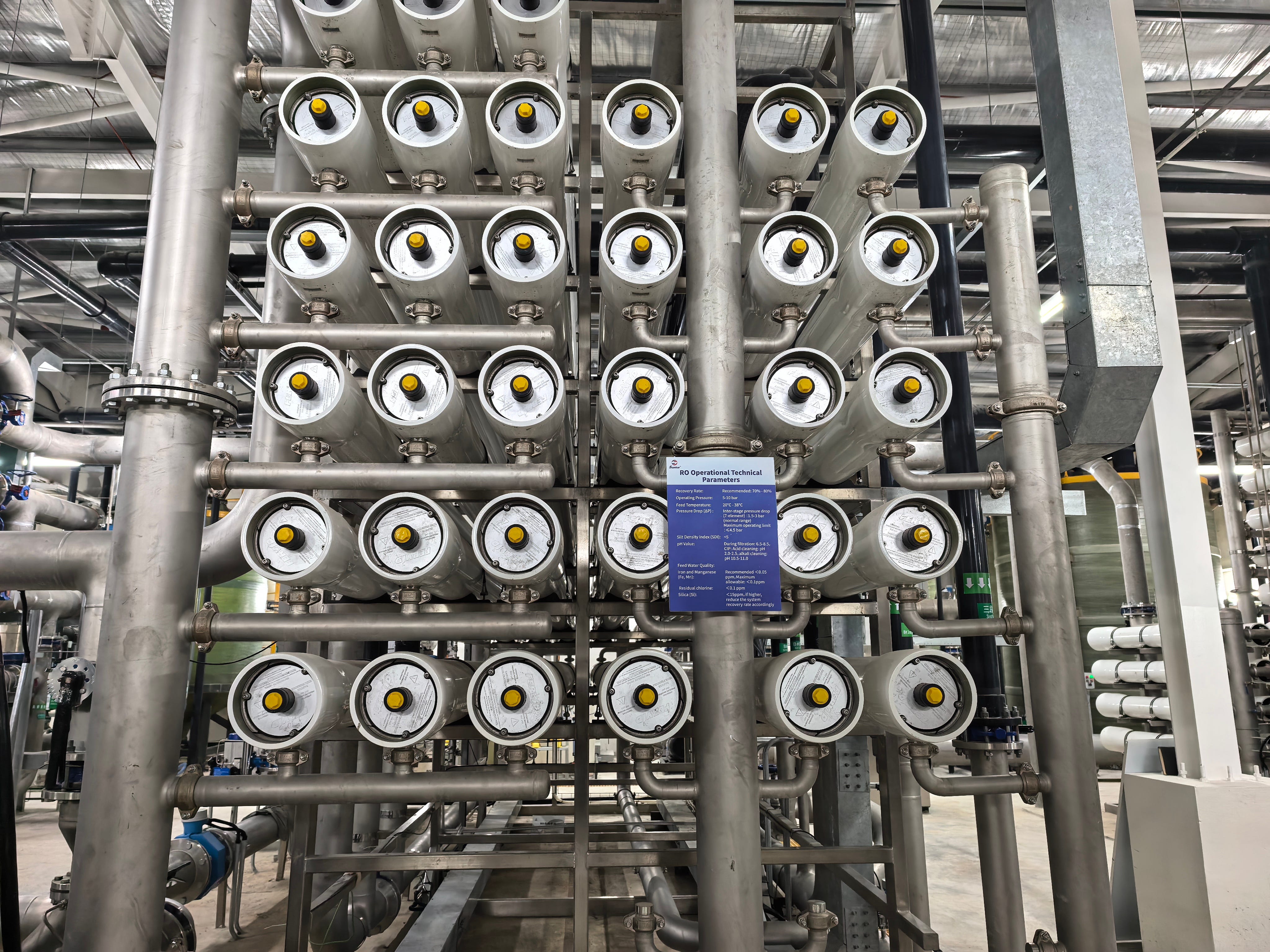
Let’s start with water. Recent government data shows that data centres in Selangor, Kuala Lumpur, and Putrajaya now consume 0.47 million litres (0.012% of total water use), while those in Johor consume 9.07 million litres (0.6% of the state's total). So no, Malaysia’s data centres won’t trigger a drought by a long stretch. However, the surge in demand can certainly scramble carefully laid plans. Already, it has led to a water moratorium for data centre operators amid urgent work to divert surplus water to places that need it, as well as to complete the construction of new water treatment plants.
To cope, hyperscale operators there are building water treatment plants and wastewater treatment plants, such as the Bridge Data Centres Water Reclamation Plant, the very first data centre-operated facility of its kind in Southeast Asia. I had the opportunity to visit it, which you can read about here. Elsewhere, it was revealed that an upcoming Google data centre at Port Dickson will have a new water treatment plant with a capacity of 65 million litres per day, as well as an off-river storage facility for a "steady water supply."
Power is another consideration. At the heart of data centres is access to power, which gives operators an advantage in negotiations. This has resulted in spurious or overly optimistic applications for electricity, which is a problem for power plants and government planners. To curb this, Malaysia has just announced that it will prevent speculative power applications for data centres by applying a penalty per kilowatt for unused capacity if they fail to utilize at least 85% of their requested power.
My point? Every market faces a hard ceiling. Whether it’s access to electricity and water in Malaysia, limited carbon footprint in Singapore, or investor confidence in other regions, they all serve to add friction even in the face of surging demand.
Location is defined by connectivity
Speaking of Singapore, the country had previously imposed a moratorium on new data centres before moving to a strategy of controlled growth. In December 2025, the DC-CFA2 was announced, which will offer at least 200MW of data centre capacity to an unspecified number of operators based on proposals to be submitted. Given the slower growth, how will Singapore maintain its hub position?
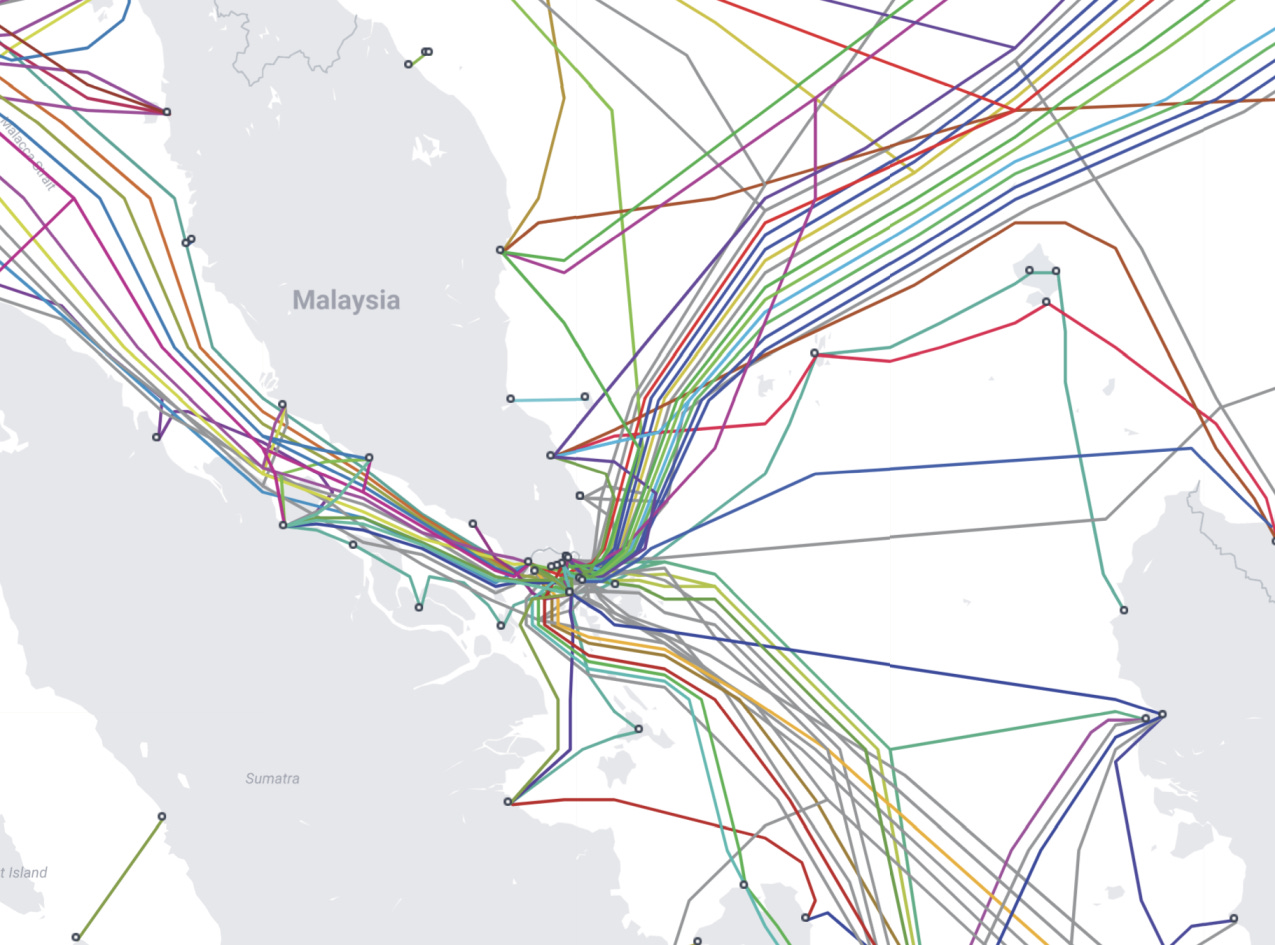
Turns out the geography works in its favour. Over the last decade, it has positioned itself as a literal hub for connectivity, with one of the highest numbers of subsea cable landings in the region. In a conversation with an industry veteran a year ago, I was told that Singapore has 10 times the international bandwidth of Malaysia at the time.
And Singapore has announced plans to double its capacity for cable landings over the next decade. The strategic importance comes into sharp relief when you consider its very limited shoreline amid the massive maritime traffic and sheer number of subsea cables already landing - 28 as of end-2025. So while data centres are typically built in locations with access to power and water, location matters insofar as access to subsea cables is concerned.
Construction is only the beginning
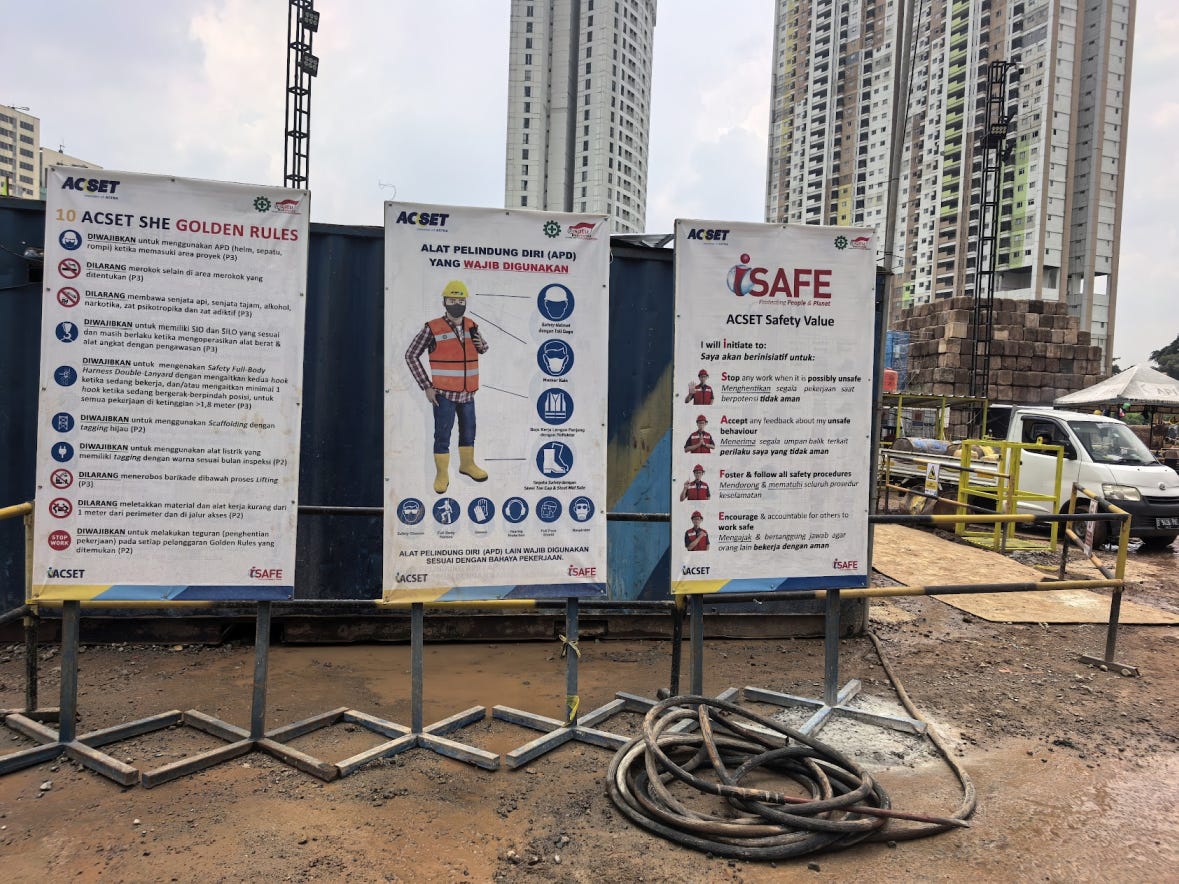
Just like data halls are more than just a safe room to place servers, modern data centres don’t exist in a vacuum. An entire ecosystem is required to make them work; even the largest hyperscale operator won’t be able to do everything alone.
For instance, there is the general contractor for the structural works, then the mechanical, electrical, and plumbing (MEP), and plant and equipment installation. This is followed by the deployment of control and monitoring systems, white space fit-out, and finally testing and commissioning. Each of these requires its own set of vendors and specialists.
And as rack density continues its inexorable increase, there is a need to deploy liquid cooling. Inexperience can cost dearly here, especially when you consider how a cooling leak in September last year damaged millions of dollars’ worth of GPUs. Finally, there is the trained and experienced manpower required to keep the data centre operational.
Whether we're at the start of a supercycle or heading for a correction, the fundamentals remain the same. Data centres need water, power, connectivity, and an ecosystem of skilled people. Southeast Asia has room to grow, but the shape and speed of this growth are inextricably tied to each market’s ability to navigate the hard truths outlined above.
A section of this first appeared in the commentary of my free Tech Stories newsletter that goes out every Sunday. This newsletter is a digest of other stories that I wrote in the preceding week. To get it in your inbox, sign up here.